The Smallest Part

“For most of my life, I’ve felt that there must be more to our existence…it’s strange to think that you accumulate all this experience, and maybe a little wisdom, and it just goes away.

So, I really want to believe that something survives, that maybe your consciousness endures. Nut on the other hand, perhaps it’s like an on-off switch. Click and you are gone. Maybe that’s why I did not put an on-off button on the iPhone”

  • Steve Jobs

Yes, most of what you do, what you experience, what you go through, people, relationships, experiences, memories, will go once you are gone.

The questions then are how you center yourself and focus on the purpose of your journey.

What’s Important?

The ability of the illusion to win over the real is larger than what anyone can imagine.

Ultimately, we all see ourselves as rational being.

It’s always the other side of the debate that is irrational.

The thing becomes the center over what makes the thing worthwhile.

The outcome drives the journey more than the journey itself.

The false notion of personal satisfaction becomes more important than what gives work true meaning.

Unfortunately, this has not changed and is hardly likely to change because you are reading this blog.

Cause ultimately the world can only see the on/off button and not what’s behind it and till that doesn’t change we will keep chasing the last mile even though the joy that comes with the achievement might not last the mile.

The Lifecycle

Business focuses on gradual accumulation of intrinsic value, derived from the ability of our publicly owned corporations to produce the goods and services that our consumers and savers demand, to compete effectively, to thrive on entrepreneurship, and to capitalize on change. Business adds value to our society, and to the wealth of our investors.

When you think about investing your time and your money in this way, it gives you a lot answers.

The key words are-gradual, accumulation, intrinsic, produce, effectively.

Are we thinking about what we do in this fashion-gradual accumulation of intrinsic value to produce effectively

There is the key.

The tangible “Outcome” is a moment in this journey.

Rest all is work which creates the meaning that results into this outcome but is mostly “intangible”.

Enough

At a party given by a billionaire on Shelter Island, Kurt Vonnegut informs his pal, Joseph Heller, that their host, a hedge fund manager, had made more money in a single day than Heller had earned from his wildly popular novel catch-22 over its whole history. Heller responds, “Yes, but I have something he will never have… enough

Thank you for reading

Invisible

Think about 2 persons getting arrested by police and kept in 2 separate cells.

Each is being given a choice to either remain silent or blame the other person.

Here are the scenarios:

  • If both remain silent, the sentence is 1 year
  • If one remains silent and the other blames him, the accuser goes free while the one remaining silent gets sentenced to 5 years
  • If both blame each other, both get 3 years in jail

What’s the most rational thing to do?

Obviously, act in self-interest.

However, acting in self-interest still gets you 3 years in jail, while remaining silent gets you free in 1 year.

Again, you don’t know what the other person is going to do so the rational choice will be to blame the other person and hope for the best.

That ladies and gentlemen is the prisoner’s dilemma when presented with choices whose outcome can depend upon how others will react.

Think of Elections

In any election where there are more than 2 choices, it is very difficult to get a free, fair and rational choice that is elected by actual majority.

In effect, the candidate with highest votes might have been rejected by the majority but gets the highest number of votes and hence gets elected.

This is Arrow’s impossibility theorem refers to.

The Invisible Hand

The laissez faire theory propounded by Adam Smith proposed that everyone acting in their self-interest shall create the maximum social benefit.

Because as you start thinking of cooperation, it can soon become collusion benefiting a few.

Countries have made elaborate rules to tackle collusion.

As collusion benefits only a few.

Who does it hit?

The individual small guy.

Mafia

“Oh, private equity is a mafia”.

That’s what an investor told me a few days back.

The best of the deals only goes to the same people and all we are served is sloppy seconds.

That’s what regulated markets try to prevent but can they.

Individuals think they can beat the market by doing research, uncovering hidden gems, and accumulating positions before the big fish.

However, the markets are unique in the way that big fish create liquidity.

They move the tide and the broaden the interest in prices to go up.

So, you need the big guys, however the big guys will enter before you and would have cornered the fat gains so you might be the one holding the can at the end of the run or you might get in early and wait forever because the big guys don’t get in at all.

What to do?

No one can make anyone believe that they can’t achieve something.

In fact, the mere suggestion becomes an ego battle.

So, what’s the way to think about it as an individual investor:

  • Segregate your portfolio
  • Have 1 part in quality or index funds
  • Have a small part to play the ego game and make yourself believe that you are a great investor

Remember, investing and driving is same.

In driving an accident will not only hurt the other person but also you plus the repair expenses.

Similarly, ego investing decision might help your ego but not your wealth.

Acting in your self-interest will mean balancing your ego with your need to grow your wealth.

Ultimately, you don’t have anything to prove anyone through your personal portfolio.

Remember that.

Thanks for Reading

A Separation

Recently while watching CNBC during their Bazaar Morning call, I came across an old colleague who had been called to give his market view on various stocks.

The segment started with the anchor conveying his and the team’s condolences to the individual for the loss of his wife and his words were.

“None of us knew that you have been carrying this pain since last 1 year”.

His wife was suffering from cancer that was detected last year.

All these months as a routine he was on TV almost every day on one or the other channel.

And not even once you would have got the impression that his wife was on death bed, and he was going through this stress.

The Mumbai Spirit

The famous Mumbai Spirit is invoked every time the city goes through a crisis- floods of 26/07/2005 or the siege of 26/11/2008 or the multiple bomb blasts in the city.

Each time the next day people of Mumbai are back to work doing what they must.

While people outside of one’s realm would dispassionately require you to be professional, is it that easy?

It is said that people don’t care for who you are, they only care for what you can do for them.

There are all kinds of worries around us all the time.

  • Income/job stability
  • Office politics
  • Loan payments.
  • Health/sickness-self or someone in the family
  • Kid’s education

While these are the near to home worries, we also worry about the world in general:

  • Wars
  • Geopolitics
  • Domestic Politics
  • Religion
  • Economy
  • Inequalities

However, you still must put your head down and achieve every day what people expect you to achieve.

Separating what’s going on around you or what you are going through emotionally, mentally to maintain your composure and doing your job the way it needs to be done is least appreciated trait of human beings.

Always Something to be Skeptical About

There is so much negativity around and the noise from social media amplifying it that your head will spin, and you will question your very existence.

As an investor, I have realized that you can’t let the negativity cloud your investing judgement.

Humans and the world have survived all kinds of crisis including the times when people thought world’s resources will be over soon and human race will be wiped out due to malnourishment and hunger or decades of cold war when people feared that nuclear bomb shall finish the world.

And closer still the pandemic when investors quit the market fearing the worst.

However, we came out on the top each time.

Maintaining that composure and separating your investment decision from how the world around you are operating at any instance is part of the investing discipline that you build.

Each negative spiral has the potential for something positive and each positive action that sent market soaring can bring it down.

Nothing is more illustrative of this than the covid period.

Everything was shut, people were sitting at home.

The Govt.’s came gave stimulus, cash cheques and supported the economy to the extent that we saw the shortest bear market and a huge bull run.

And eventually the glut that the Govt’s created and the supply chain disruptions due to covid closures followed by Russia Ukraine war created the perfect storm for a large correction.

So getting lost in these negativities instead of choosing to stick to your investment discipline is the biggest mistake that you can make.

Hope the next time you will do things differently.

Thank you for reading

Birds Can’t fly

You read the title and the first reaction is it can’t be true because you have seen birds fly.

So where does it come from:

  • Penguins are birds. Penguins can’t fly and hence all birds can’t fly

Correct observation but wrong conclusion.

You can think about things in 2 ways:

  • All spiders have 8 legs. A tarantula is a spider and hence a tarantula has 8 legs.

Now if the 1st 2 points are factual, the 3rd is going to be true too.

However, what about this:

  • All bald men are grandfathers, Peter is bald and hence Peter must be a grandfather.

The 1st assertion itself is false and hence no chance of this being true

So, you either observe something and conclude, which is an anecdotal style of conclusion; or

You first theorize, the observe and then conclude. Like the 1st example of spiders.

How does it matter?

The challenge in using a specific observation to make a generalized conclusion is that it is more likely to be wrong than right.

Think about observing 100 dogs with each having fleas and concluding that “all dogs have fleas”.

It will take only 1 dog without fleas to prove this wrong.

Or observing 100’s of white swans to conclude that all swans are white will be refuted by observing a black swan.

Anecdotal conclusions tend to give the most recent and negative experience undue bias. As a result, most of us are inclined to be over-confident when making predictions based on a recent experience, even when we have more reliable probabilistic information on hand.

Your most recent success of failure doesn’t make you an expert or a loser.

There is more to success and failure than the recent track record.

Probability

Your recent track record is a feed to how good or bad you are but it’s not the entire feed.

The following matters:

  • How you think about what you do?
  • What tools are available at your disposal and how do you deploy them?
  • How do you decide and is that process consistent?
  • How do you express your ideas and views and what are they backed by?

None of the above create certainty of success/failure but all of this creates probability for your success or failure.

 A good process can improve the probabilities of success and failure and not alter the course altogether.

Different Expertise

There are 2 different standards that you apply even though you use the same basis each time.

One is as the expert who is employed as a professional whether a doctor, lawyer, or financial advisor and the other as the user who has to choose the expert.

As a user you are looking at the 4 points above and aligning your comfort and thought process with that of the expert so that you can work with them well.

However, if you want to be the DIY expert especially in investing, you need to use the above benchmarks to see if you wo0uld employ yourself to do the job.

Just the way, if you are not a doctor or a lawyer, you would not even think of employing yourself as a doctor or a lawyer similarly think multiple times before employing yourself as a financial expert if you are not one.

Remember your current track record is only one of the date points and doesn’t prove anything about your general expertise.

Rationality is not a strong suit of individuals when they taste success in any field, however if you can deploy rationality, it will surely help you.

Thank you for Reading

Lucky You

Imagine a situation in which the captain of the Indian cricket team can choose only 1 more bowler in his team out of the 2 in front of him.

He takes them to the nets and both perform similarly.

So, eventually the captain flips a coin and picks one of them.

In the next match again it’s the same situation and now the one got chosen has some experience of bowling in actual match and hence the experience gives him another opportunity.

By the time, it’s the 3rd match, the one who has already played 2 matches has a track record which places him in a better position than the 1st one to be in the team and just like that the flip of the coin created a star while finishing off a promising career.

This is what’s famously known as “The Matthew effect” which illustrates how those who begin with an advantage accumulate more advantage over time and those begin with a disadvantage keep accumulating more disadvantage.

It is fascinating the role that luck can play on ones success.

Anyone can experience luck. In his Physics, Aristotle gives a famous example of chance: a man who is owed money visits some place for an entirely different reason (say, goes to the marketplace to buy pomegranates), by accident runs into the man who owes him money, and is able to collect it.

But Aristotle explores the possibility of a second kind of lucky person in the Eudemian Ethics. This one is consistently lucky, succeeds without recourse to rational deliberation, especially thrives in risky pursuits and in matters where, although skill is decisive, a lot of luck is involved—for example, in military affairs or piloting a ship. Aristotle has no doubt they exist, but the lucky are an odd group of people. They do something that seems impossible. They succeed by chance “always or for the most part,” while chance seems to have as part of its definition precisely that it does not happen always or for the most part.

Fascinatingly, he frames it as a question of internal desire. Consistently lucky people somehow have an urge toward what is good for them, just what they should, when they should, and how they should.     

You Got Lucky-What’s next?

Yeah, you won the lottery, what’s next?

As per a research, 70% of all lottery winner lose it all within 5 years.

Getting lucky was random, you didn’t plan for it and you didn’t have to work for it.

However, what follows require work.

In both the above example, once the bowler got the chance, he had to perform to ensure his place in the team for the next match.

The coin flip got you in but will not keep you there.

As Aristotle says, the consistently luck people have a desire to succeed and the luck favours them.

There lies the conundrum

Whether it’s the bowler who retains his space or someone who succeeds consistently, such people are in majority.

The reason 70% of all lottery winners lose it all is because the desire to succeed needed to maintain the luck is missing.

The new investor in equity markets winning as soon as he enters is experiencing nothing other than beginner’s luck.

However, investing is a serious business.

It is not about just getting there and investing, it goes way beyond that.

Which sector, which industry, which company, who has the moat, is the price in your favour-risk/reward etc., etc.,

It needs to work to stay lucky and that’s not everyone’s cup of tea.

Investing for example, needs creating a discipline and not doing stuff for the heck of it.

Yes, your portfolio needs updating, its needs changes, however that can’t be the objective.

You have to set up the perspective right.

You spend your energy on creating a right portfolio that fits with your risk-reward and investing psychology, whether directly or through an advisor and then keep yourself aware of what’s working and what’s not, what requires change and what needs to stay on and for how long, what needs addition and what needs subtraction and for what reason.

You want to stay luck, you need to put in the work whether its investing, your job, your relationship and life in general.

Thank you for Reading

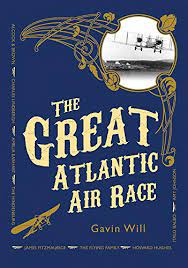
The Great Atlantic Air Derby

Raymond Orteig, a successful hotelier in New York offered a prize of USD 25,000 in 1919 to anyone who could fly non-stop to cross the Atlantic.

No one took up the offer that was renewed in 1924.

The 1st team that took it up was set up by French war hero Rene Fonck and Russian Igor Sikorsky.

Sikorsky built the plane having at a cost of USD 100,000 with backing from a clutch of investors.

It was a plush plane with leather fittings and cooking facilities.

Unfortunately, as they took off on their voyage, the plane crashed before the take-off.

  • Here is what happened:
    Fonck insisted on flying even before everything was ready
  • He overloaded the plane with excess fuel, food, radio, clothes, presents etc., etc.,
  • The load amounted to 28000 Pounds that the plane was in no condition to carry
  • As the plane started taxi on an ill-prepared airstrip and gained speed, it took inordinate time to take off and eventually when it seemed it had gained enough speed, it still couldn’t take off and just tumbled off the runway
  • While Fonck jumped off, 2 of his fellow crew got burnt inside

100,000 USD and 2 lives wasted for nothing

The 2nd team led by Richard Byrd supported by Rodman Wanamaker with plane designed by the legendary Anthony Fokker made a plane that seemed air worthy.

Here is what happened:

  • The plane was designed with fuel tank occupying the middle part thereby effectively cutting off passage between the front and the back
  • As the plane took off handsomely, Fokker who was at helm realized that the only way to land was to come down nose first
  •  As Fokker attempted to land as gently as possible, the plane went down nose first and toppled over
  • Part of the propeller pierced through the chest of one of the members while Byrd had his left arm snapped off

Simple but deeper

The lessons seem simple, but deeper.

Throughout history humans have grown by taking on challenges that move them beyond the comfort zone to make progress.

The 2 teams took on the challenge not merely for the prize but to make it possible to fly long haul.

What really happened?

  • The enthusiasm was there
  • The attempt and bravery were intact
  • The competence was missing

Each of the teams above has members with background in aviation.

While Fonck had destroyed over 75 enemy planes in World War 1, Fokker was responsible for making the 1st machine gun to be used by attaching it to the propellor of the plane and later build planes professionally.

However, in attempting this flight they needed more that the machismo and needed to be practical about completing such a long-haul journey.

Everything is Simple, till it’s not

I keep reflecting on equity market investors.

Especially the ones that came in post pandemic in 2020.

The novice inexperienced player who doesn’t understand risk gets blessed with beginner’s luck.

So far so good, however if think of beginner’s luck as expertise, you have had it.

Just like Fonck or Fokker, you would be probably ill-prepared about your own inadequacies even though they at-least had a background in aviation.

Enjoy the luck, then step back

Now that you have experienced the beginner’s luck, you might want to step back and evaluate how prepared are you.

The following is bound to happen:

  • Market mean revert
  • Unintended consequences of what took the markets higher
  • Something completely unexpected

Think about what happened with Fonck, overloading the plane, it didn’t even take off

Think about what happened with Byrd and Fokker, no way to balance the load.

  • Over concentration
  • Lack of balance
  • Not reading the tea leaves

The reason these challenges happen is because they are beyond the core competence of an average investor.

Learn or Hire

If you want to do something full-time, either learn or just hire an expert who will help you navigate.

It’s a long-haul flight, don’t just take off without adequate preparation.

Remember things might still go wrong, however you will at-least be better prepared.

Stay the Course

Sustain

The Roman empire that lasted almost 1000 years collapsed at the back of several factors including disease (plague), weak economy, climate change leading to lower agricultural output with the final nail in the coffin coming from the attack by the barbarians.

General Electric, founded in 1892 thrived and remained one of the largest companies in the world for a long time, till a new aggressive culture started to weaken its core leading to its ouster from Dow Jones in 2018 and now the talk of splitting up the company further.

Kongo Gumi, the worlds’ longest lasting business that has been around for over 1400 years.

It built the first temple in the year 578 BC and thrived over several years by keeping its business simple, focus on its core competence and passing on several opportunities to scale up in different direction.

The lure or the greed of growth however enticed them in 1980 leading to them venturing into broader commercial real estate business and they levered their books.

This was just prior to the bursting of the Japanese economy and propelled by a change in the Japanese culture when the donations to temples (bread and butter for Kongo Gumi) fell leading to collapse in their revenue and led to the collapse of the company and take over in 2006.

What’s Common here?

Even those who stay in control for 100’s of years can collapse over a single generation if they don’t adapt.

What led to the success itself became a curse?

Focus on maximisation or optimisation (in corporate lingo) over sharpening the saw may well lead to collapse.

Venturing beyond the core competence without attention to what might/might not work can prove detrimental to the franchise.

Think about the massive collapse in Sri Lanka.

While multiple factors including covid, tourism revenue collapse, corruption might be counted.

A whimsical decision to allow only organic farming without scientific basis, led to the large agricultural economy finding itself on path of destruction with millions of dollars lost in the tea business itself.

Sustaining

In the game of cricket, there have been only 2-3 one day matches (50 overs a side) in which a team has scored at the rate of 10 runs per over.

However, teams routinely score at over 10 runs an over in a twenty over match.

It is often easier to score at a fast clip for shorter periods of time.

However, if you are playing in a longer format, you need to find a way to last the full quota of over as twenty overs of 10 run rate will not give you a competitive score to win the match in a 50 over format.

That’s why you see attack in the beginning and end and consolidation in the middle overs.

As an investor that’s the strategy you are looking for.

When a crisis happens, investors over-react and valuations come in your favor, so you build aggressively your position in businesses you like.

Then market comes back, and you consolidate positions in the best businesses that you own while booking out of cyclical trades.

Then, you watch for opportunities to deploy.

If you try to hit a six every ball, you will probably last an over or 2.

However, if you hit a six and then consolidate the score with singles while playing each ball on its merit, your chances are higher.

Investing is a long journey just like building a business or empire, it will collapse if you are not vigilant or are in too much hurry.

It requires work and then requires patience.

It also requires you to be active and vigilant to risks and opportunities and if you are not up to the task, finding a good manager who aligns with you, is your best choice.

Now go back and read again the tweet on top.

Thank you for reading

Search

Growing up, in the late 80’s and 90’s, if you needed to research, seeking information/knowledge, or looking for entertainment, your options were limited to ordering books by mail order, accessing books at the local library, which invariably never had what you were looking for and for entertainment, you had 2-3 hours of television on state run single channel.

The kids of today don’t appreciate when their parents from that era get worried about their future or their career goals.

They can’t relate to the non-internet, non-technology, and non-connected world of the 80’s and 90’s.

Even those who were working on some of the technological advances, or their academic theories perhaps might not have realized the deep impact they would have on subsequent generation for whom tech will be as normal as sleeping/bathing/eating.

Singularity

The point where equations stop making sense, where technology changes the way people are used to living and previous generations find it hard to align themselves with the way things are is “Singularity”.

The very 1st issue of The Public Interest in 1965 had an essay title, “The Great Automation” which talked about how American wages will skyrocket, working time will decrease and Americans will get rich and bored.

Well, this didn’t happen.

As Peter Thiel points, for the society to remain stable, things need to grow, which means we need singularity, the “GOOD” kind.

The “Good Singularity” can lead to improvements that uplifts people from poverty, hunger, disease etc.,

The fear of machines, computers/robots, empowered with AI taking over our lives shouldn’t stop us from leading to “Good Singularity”.

The Search for Alpha

The holy grail of investing is driven by search for a manager or a strategy that can continuously deliver meaningful alpha over the benchmark.

Many have predicted the takeover of active investing by powerful machines and automated trading strategies that will negate the need for an active manager.

And for a while the Medallion fund by Renaissance came up with stupendous returns based on its quant strategies that looked for market signals to trade.

The fund failed to deliver in 2020 and saw an exodus of over 15Bn USD in 2021.

What Happened?

The smart computers and all the smart people combined should make the hurdle to achieve alpha higher and higher.

So, would Alpha go to zero?

Will the financial markets become perfect?

Should we brace ourselves for this “financial singularity”?

The challenge to this hypothesis is that people continue to trade on emotions driven by greed and fear propelled by narratives given by half-baked influencers and out of job fund managers, more than knowledge.

There is always a positive story and an equally compelling negative story about the same investing opportunity.

And there are enough number of people sitting on either side for the market to become perfect.

You can automate an investment guru’s investing style, however that doesn’t account for the creativity of that investment guru to device new investment models.

As an idea financial singularity seems tempting, however human judgement both good and bad will continue to drive investment decisions and financial markets outcomes for the rest of our lives.

Thanks for Reading

Case for Optimism

David Deutsche in his book “the beginning of infinity” talks about the similarities between a Russian roulette and future of civilization.

Russian roulette is random. We cannot predict the outcome, however, we do know what the possible outcomes are, and the probability of each, provided that the rules of the game are obeyed.

The future of civilization is unknowable, because the knowledge that is going to affect it has yet to be created. Hence the possible outcomes are not yet known, let alone their probabilities.

Thomas Malthus propounded in 1798, what’s known as the Malthusian theory of population.

He believed that while the growth in population is geometric (2, 2ˆ2, 2ˆ3…..), the growth in food production is arithmetic (2, 2+1, 3+1, 4+1…..).

Malthus then argued that because there will be a higher population than the availability of food, many people will die from the shortage of food.

He theorized that this correction would take place in the form of Positive Checks (or Natural Checks) and Preventative Checks. These checks would lead to the Malthusian catastrophe, which would bring the population level back to a ‘sustainable level.’

Based on Current Knowledge

What Malthus theorized was based existing trends and understanding of the existing technology of food production.

He had not envisaged how the food production and storage technology is going to evolved, catering to not just the current population but enabling storage for the future.

The Case for Optimism

When a prediction is made basis the facts as they exist currently and extrapolating them into future, what’s being missed is how humans have made progress overtime and conquered odds stacked heavily against the end of the civilization.

There are problems today and there will be problems in the future.

The black plague that struck humanity in 1353 lasted 7 years killing 75-200 million people.

It was caused by the bacterium Yersinia pestis.

Now we know that today and there are several medicines to treat it, however insufficient knowledge at that obviously caused a disaster.

75-200 Mn people died at a time when the global population was 475 Mn caused a drop of 20% in global population.

Compare that to Covid-19 for which vaccines* were attempted and administered in record time.

*Now there are debates about the efficacy of the vaccines, however the attempt above is to address how knowledge can become a weapon against epidemics and not to debate the efficacy of the vaccine.

What gives you optimism hence when you look at all the global problems today is that we are far more prepared and continuously improving our tools to face the future.

A Lesson for Money Management

Since last October when the markets peaked in India.

Lot of investors have seen their portfolios shrink.

It has been a shock to even experienced investors leave out the first times who had only experienced positive gains since they began.

I especially get concerned about investors in crypto for whom some investments have got completely wiped out.

The case for their optimism is here:

  • Experience always makes you better at almost everything provided you take the right lessons
  • Keeping a balanced portfolio is more important than maximizing returns
  • Returns in equities are never linear
  • Equity markets always reward you in the long run provided
    • You know what you are invested in
    • You keep evaluating why you invested in something and if that rationale has changed for better or worse
    • Re-balance the portfolio to keep it in steps with time, no theme in equity markets is same; Benchmark indices today are unrecognizable compared to the same benchmark 20 years ago
    • If you can’t stay in step with the markets, find a good advisor and lean on them to keep you stay the course

Here is the final thought from David Deutsche:

“Problems are inevitable because our knowledge will always be infinitely far from complete. Some problems are hard, but it is a mistake to confuse hard problems with problems unlikely to be solved”

Parts or Whole

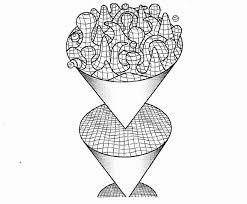
An old saying tells us that “the whole is greater than the sum of its parts”. 

In scientific lingo it’s called “emergent properties” referring to properties that are completely unexpected.

These arise from a complex interaction of multiple parts which individually do not possess these properties but come up with the properties when thrown together.

Think about how insects like ants come together in groups and create complex structures like underground colonies or mounds that reach meters into air that even includes elaborate cooling ducts and heat dispersing fins.

A single ant is a limited organism, with little ability to reason or accomplish complex tasks. As a whole, however, an ant colony accomplishes astounding tasks, from building hills and dams to finding and moving huge amounts of food. 

Or creating a new specie by crossbreeding to find that the new species has properties that the original species don’t have individually.

In the human body, hands have a function, so do legs, eyes, and other parts.

These body parts are mechanical in their functioning, however when combined with the brain, they acquire properties that helps us express our emotions or protect us from a danger.

Understanding the WHOLE

From the lates 1970’s  accelerated in the 1980’s, Asian countries became manufacturing hubs and their contribution to the global supply chain went up many fold.

Rich Western countries with their just in time and six sigma practices looking to reduce cost for boosting shareholder value revelled in “cost arbitrage” shifting manufacturing from their countries to Asia.

This phenomenon had several positive outcomes not the least being higher productivity, lower cost and resultant lower global inflation.

The connectedness that it created across the globe resulted into a phenomenon called globalization.

Operating on their own each part would have struggled, however coming together they created prosperity.

Of course for years we only experiences the positives till the 2008 crisis, a great example where creation of Collateralized Securities rates AAA with junk underlying in 1 country engulfed the entire world into a recession.

Now if all the countries would have kept non-operating, the way they were, the impact would not have been that severe, however the inter-dependence caused a global recession.

Thinking & Executing the Whole

The ability to take these unconnected parts and understanding how they react to each other and create something unique is perhaps essential to investing.

  • What’s the business of the company?
  • What is it dependent upon?
  • What strength does it have?
  • What can impact it negatively? For example, can the war in Europe impact IT service companies’ business negatively in India
  • How’s a business trying to create an eco-system rather than doing what they have always been doing?
  • Is the strategy just some individual parts or do they have a meaning?
  • After all this is the price, I pay for the business aligned with all the above.

Creating a narrative is one part and alignment with things not visible or faint and the price you pay is another.

A company making commodity soda ash or fluorine might appear to have no advantage, however, combine that with what these commodities could do to an emerging need like EV batteries and what the companies are doing to complete that journey and the “WHOLE” becomes clearer.

There are no easy answers and developing yourself to understand complex systems is not everyone’s cup of tea.

However, this could be a yardstick to find a manager who can help you navigate complex systems.

Thanks for Reading