The Wake

“I like to think that something survives after you die”. “It’s strange to think that you accumulate all this experience, and maybe a little wisdom, and it just goes away. So, I really want to believe that something survives, that maybe your consciousness endures.”

me. “But on the other hand, perhaps it’s like an on-off switch,” “Click! And you’re gone.”

“Maybe that’s why I never liked to put on-off switches on Apple devices.”

Steve Jobs biography by Walter Isaacson

What really endures?

Does anything endure at all?

Does it matter?

What does matters?

What Stays, but What just goes away?

Yes, Steve Jobs is right, going away is just like a switch on/off button.

But is it the person who is gone or is it the wisdom that’s’ gone.

What he worries about is the whole accumulation over a lifetime of experiences, wisdom, learnings that you hold inside of you.

Can it just go away, of course it can, if the only person who is aware of that wisdom, those experiences is the person who accumulated them.

But if you remember someone for their words which they uttered 10,15,100,1000 years ago that means the wisdom endured.

It didn’t get lost because the person was gone.

On the other hand, is this:

“I have seen men die at the age of 25, yet buried at the age of 75”

Benjamin Franklin

Often the analysis f a person with 10 years of experience is-is it 1*10 or actual 10?

Did this person then accumulate anything at all?

What would you remember this person for?

Will such a person be part of any history pages or memories?

Is that a life worth living?

To be sure, most of us will not be part of history pages, that doesn’t mean, the wisdom and experience that we accumulated went waste.

It might not have led to monumental changes like creating the highest selling product in the world or AI, but it might have led to improving someone’s life in the community that you live and sometimes that’s enough to leave behind as a legacy.

What’s the right way then?

This is the Bhagat Singh way of thinking about it.

Your wisdom, sacrifices, how you made people feel, how you contributed to their lives endures.

What’s the motivation?

Am I happy going through life like I am strolling in a park and by the way, there is nothing wrong with it or am I planning to get out of the park, look at the world around me, imagine how it could be, make a difference and let that legacy endure.

The vast majority will not endure, most of the people will not have the motivation, or will power to accumulate the wisdom and do something with it.

Remember wisdom accumulated but unused can’t endure.

Only when you create something from that wisdom, it will last you beyond your physical presence and that is going to endure.

Human Characteristics Endure?

Both good kinds and the not so worth remembering kinds can endure beyond the lifetime.

You will find as many kind people as selfish ones.

In their lifetime, people close to them will remember them for the kindness or selfishness.

But those are not life altering events, what’s life altering is when the kindness goes to a certain extreme and life is devoted to make other’s life better, or selfishness/cruelty goes to another extreme to make life difficult for others.

Both need extreme patience and wisdom to rally others to a cause but with different outcomes and then those outcomes, their impact and the wisdom, experience and genius of the person unleashing it endures.

This is what Charles Mackay had to say

“Men, it has been well said, think in herds, it will be seen that they go mad in herds, while they only recover their senses slowly, and one by one”

My conclusion is that those who can actually separate from these herds have a greater chance of endurance that those who chose to remain in this herd.

The RARE

Before the discovery of Australia, people in the Old World (specifically Europe), believed that all swans were white.

In fact, the Roman poet Juvenal Born 55-60 CE) in his poem Satire Vi wrote and I quote:

“ a rare bird in the world, very similar to the black swan”

However, the expedition led by dutch explorer Willem De Vlamingh discovered a black swan in Australia in 1697 breaking the myth about all the swans being white.

The beauty of this discovery is how one little bird changes your entire world view held for centuries.

The rarity, unpredictability and the impact of the find explains all there is to know about success, failures, sustainability in our personal and professional lives.

Just because something hasn’t happened doesn’t mean, it can’t in the future.

Diamonds are “RARE” & “FOREVER”?

Says who, well the marketing companies do.

First formed billions of years ago due to intense heat and pressure and brought to the surface by volcanic eruptions, diamonds became popular only in twentieth century thanks to the marketing efforts making them seem “RARE” and “FOREVER”.

What’s “RARE”?

We all know that something that’s scarce, uncommon or infrequently encountered qualifies as rare.

For example, a species whose population has dwindled to 10000 or lower.

A disease that impacts 65 or lower number of people per 100000.

Tsunamis or major earthquake are rare.

Is “RARE” getting closer home?

And then there is another kind of rare-modern life in the 21st century.

Human relationships that were simpler for ages and centuries have seen profound changes in the last century or so like most of the other elements around.

As lifestyles improved, income became better and we got more nuanced not just about our preferences but the ability to freely express them, modern lives became complicated.

Differences in how people express or want attachments to be expressed towards them, ability to communicate, the expectations from each other make getting into a relationship and sustaining it in a healthy way highly complicated.

Finding a “true connection” has become so rare and so has the ability to have a true relationship that lasts.

Respecting each other and not just running after the next best thing.

And this would apply to both personal and professional relationships.

A new employee gives the same hope to the Management as a new partner gives to a human being.

Alienating people has thus become easier than ever and sometimes it’s very difficult to go back once you have turned your back on someone as soon as the next best thing happens to you.

Is “RARE” really “RARE”?

Global population estimates peg black swan population at a minimum of 100,000.

As per a research team at MIT, there is over a quadrillion tone of rough diamonds that lie deep below the earth’s surface.

Yes, you read that right there are over 10 crore crore tons of diamonds available below the surface of earth.

That’s to say that “RARE” things happen-they happen less but they do happen.

What’s the “REAL” Challenge?

Some of the diamond supply mentioned above might be so deep that the cost of extraction will make it unviable for anyone to afford it.

Sometimes a rare disease (covid for instance) will spread in a way that all life will be endangered.

This is where everything gets tricky?

Take for instance the search for a “True connection” between people.

Sometimes, it’s like the deep extraction that you might have to go for if you are targeting to capture 100% of the diamond supply.

Apply that if you must to investors who have seen a “RARE VIRTUOUS CYCLE” last 4 years and think that this is how investing is supposed to be-well all know how that turns out.

Don’t WE?

Well, “Virtuous Cycles” have happened in the past-think Japan in 80’s, India from 2003-07 or the 1994-99 period in the US

The “BIG” Question?

Rare will come your way, and you will recognize it but can you respect it, make the most of it, preserve it and then make sure to lve with its ups and downs because they will happen.

If you find that rare connection with someone-a friend, boy/girlfriend/husband/colleague/employer-can you balance the positives with the negatives and be able to keep the rare while working with the not so desirable traits and let the bigger picture guide you or will you lose patience because of the negatives and let go of the rare.

Because remember its “RARE”-low probability occurrence, might never happen again.

I hope you do get the rare and never let it go

Designed by……….

The Rare Earth hypothesis* lists the very favorable conditions that led to complex life becoming possible and sustaining and how that’s unlikely to occur anywhere else on earth.

These include things like:

  • Being in a favorable part of the right kind of galaxy
  • Orbiting a star with long lifetime and bearable ultraviolet radiation
  • Orbital distance that allowed liquid water to exist on one hand and far enough to not rotate in the same direction as the host star on the other
  • A planetary tilt that allows atmospheric changes to be mild and not severe
  • A molten core that protects the earth’s surface from solar radiation by generating significant global magnetic field

And so and so forth

The question that’s bothered generations of thinkers is- “Was it all random or designed”.

We have all believed in the higher power that’s created by design how the earth evolved.

But then we also have science telling us about the big bang, collisions Between dust particles, asteroids and other planets etc., etc.,

Randomly Designed

Non-repeating, non-biased and non-patterned sequence of values separates the random from the unpredictable.

Most of the time whether its your work, life, output or outcome, better career or better relationship, how we approach them is using existing experiences and mental maps that are predictable and comforting and failsafe in our head.

The idea of connecting remotely associated subjects through trial and error is not what our brain is used to.

However, often truly inventive/artistic or never seen before output is a result of connecting the unconnected.

Think about Coca Cola that was originally designed to cure morphine addiction. The original formulae were coca leaves (Cocaine) and Kola nuts and called French Wine Coca.

However, due to local prohibition law, alcoholic content had to be taken out leading to what we know today as Coca Cola.

This is how random the world can be.

Randomness Personified

Think trading or dating apps.

Data shows that over 90% of traders don’t make money in the markets and if they at all do, it might be a random trade that led them to success and not their skills.

Similarly in the realm of dating apps, reward for the hard work is matches.

Trading and dating apps use randomness to give users dopamine shots and keep them hooked.

Constantly being rewarded is as motivating as constantly being non-rewarded, it doesn’t excite you beyond a point.

However, random rewards create enough anticipation and excitement about “what’s next” helps keep up the rewarded behavior going for the thrill of not knowing when the reward will come.

Designed or Random

The design in trading or dating apps while appearing to be random are just pseudo-random.

AI and its usage will probably accentuate the use of randomness to entrap the users deeper.

The question is about human agency in this whole debate and no longer about randomness.

Those who know, they know the role of chance, cause and effect.

Right place, right time is an often-used statement to justify the role of randomness to what happens to us which seems undefinable.

The online mediums might trap you in a constant use loop but getting the trades right or finding the right partners or attaining that promotion in the job can continue to be as random as ever.

Years of looking, trading or hard work might remain unrewarded till a chance meeting, a chance trade or a chance event at work gets you what you worked for.

The credit doesn’t just go to the event and outcome but all those trades, swiping and work that inevitably created the situation which led to the trigger.

As Ray Kroc, the founder of McDonald’s said-I was an overnight success all right, but Thirty years is a long, long night”.

By throwing paint on the wall that created a random set of meaningless shapes, Da Vinci put himself in a situation that triggered his thoughts in a different direction and helped him discover new ideas or art pieces.

The NASA Example

After the Hubble telescope failed, NASA engineer James Crocker was taking a shower and observed how the adjustable shower head could be extended in different ways for personal comfort and that led him to place corrective mirrors inside the telescope that could adjust it in the correct position.

This turned Hubble from a disaster to a success.

You can make the Random Happen?

When stuck in the creative situation, life, career or relationships, unless you put yourself in different situations, your outcomes would continue to be predictable and not magic.

As Rita Mae Brown (the novelist) said “Insanity is doing same thing over and over again and expecting different results” applies to everything.

Change your approach, keep the work going and then maybe, just maybe let randomness play its role and change your outcomes overnight.

*Peter Ward & Donald Brownlee

Catastrophism

Georges Cuvier is credited with the theory of extinction being a natural part of Earth’s evolutionary process.

He did so by establishing the theory of catastrophism, that stated how sudden, violent event shaped the structure and types of life on earth.

He cited Biblical events, like the flood in the story of Noah’s Ark, and explained that those types of catastrophes were responsible for eliminating many species of organisms. He thought that such events supported the theory of catastrophism and explained how organisms went extinct and how the Earth was changed.

On the other hand, Charles Darwin was a proponent of Uniformitarianism, that stated how Earth’s processes slowly change the environment over time through uniform and continuous processes.

Same or different

While Catastrophism and Uniformitarianism seem different to me, they seem to 2 sides of the same coin.

The slow and evolving situation getting aggravated by the sudden and violent event leading to a change in the landscape.

Think about, how post the 2008 crisis, the world got used to ultra-loose monetary policy and low to zero interest rates.

This combined with over 15% of world’s supply chain getting concentrated in 1 country.

And then Covid happened, where all the administrators wanted was to protect the financial interest of their populations leading to support being extended to businesses to individuals along with rates being slashed from zero to negative.

This extra cash in hand and savings due to work from home, etc., etc., led to some unusual behaviors:

  • Savings went through the roof
  • Individual and business balance sheets strengthened
  • This led to demand exploding
  • As re-opening came, people vent out their frustration by spending

Hey, but China wanted zero covid leading to closures and lockdown in 1 country that was supposed to provide a large proportion of these goods that were being demanded.

Supply chain disruptions led the world to recession.

Building up the Crescendo

This building up took time, but a sudden event tested the whole evolutionary process violently leading to disastrous consequences.

When the going is good, who cares about process.

Everyone is a genius.

When the chips are down, process becomes your friend.

But why can’t the process remain a friend whether the going is good, or the chips are down.

At-least it prepares you for the worst and stops you from making mistakes of getting carried away.

Remember, the slow evolution or the sudden event are both out of our control, however, he we react to them is in our hands, and that’s defined by our process.

Discipline, principles, and processes are the long-term friends that help you survive the worst and leverage the best.

You will still make mistake but probably will survive to see another day.

So-remember that and Stay the Course

Evidence and its Story

Even as showrooms in Europe prepared for the arrival of 2014 vehicles, authorities in France sparked controversy with a drastic action: blocking the registration — effectively shutting down sales — of some popular new Mercedes-Benz cars, including the A-Class, B-Class, CLA and SL models.

The French environment ministry ordered the ban in response to the German carmaker’s defiance of a European Union regulation on the refrigerants permitted in automotive air-conditioning systems, and the ministry says that it won’t back down until Daimler, the parent of Mercedes, complies. 

However, subsequent Independent testing by Germany’s Kraftfahrt-Bundesamt (Federal Motor Transport Authority) found that there is “no sufficient evidence of a serious risk” as defined by the Product Safety Act (ProdSG) related to the use of the low global warming potential (GWP) refrigerant R-1234yf.

The ban led to loss of 60% of its sales were affected in France due to the ban.

Value of Evidence

Evidence based decision aim for quantification in terms of risk or cost benefit to optimize one among several alternative courses.

Often this can lead to over-simplification of the available perceptions and can lead to other alternative legitimate stakeholders.

This can generate controversies instead of resolving them.

The attempt instead of being confirmatory, should be to refute frames that violate feasibility, viability and desirability.

Challenge of telling a Story

All of us tell stories about ourselves. Stories define us. To know someone well is to know her story—the experiences that have shaped her, the trials and turning points that have tested her. When we want someone to know us, we share stories of our childhoods, our families, our school years, our first loves, the development of our political views, and so on.

Telling a compelling story inspires belief in our motives, character, and capacity to reach the goals we’ve set.

Evidence to support not to make up Story

Let’s be clear: In urging the use of effective narrative, we’re not opening the door to tall tales. By “story” we don’t mean “something made up to make a bad situation look good.” Rather, we’re talking about accounts that are deeply true and so engaging that listeners feel they have a stake in our success. 

Narratives, numbers, outcomes that we share to support our story are engines of taking it forward.

However, because they can be so compelling, it is easier to add flimsy evidence to support the story which can have disastrous consequences.

What to Believe?

Often the story well told and supported by evidence can seem very compelling.

Our idea as listeners or those who have to take a call to action is to test and not just believe.

X is doing so and X is expert so lets’ follow and do it.

Numbers look compelling and so I should go ahead.

Easy peasy, however for X this might be an insignificant part of their overall game s even if it goes wrong their impact might be too small, maybe they have a side deal or right we are not aware.

Numbers seem compelling, however what is the quality of the numbers.

The point I am trying to bring home is, the decision has to be based on right reasons.

Would I take this decision if X was not involved with the deal?

Would I take this decision even if numbers had been pushed by excessive spending or inter-party transactions?

What is my right reason to take this decision?

Unless, that’s in place, think twice.

Thanks for reading

The Curious case of Benjamin Button

Our universe began with a big bang.

The explosion stretched the very fabric of spacetime, sending superheated matter in all directions.

As it expanded, the mater cooled and started to aggregate, forming atoms, elements, star, galaxies and eventually all we see today.

However, the question remains “what was it that banged?”

According to the theories, for less than a millionth of a trillionth of a trillionth of a second after the Universe’s birth, an exotic form of matter exerted a counterintuitive force: gravitational repulsion.

Under the conditions present in the early universe, when temperatures were extraordinarily high, the existence of such a material is very likely.

It might just have been a speck, but when that speck starts to inflate, the expansion is exponential.

Universe is eternal

The Universe always existed, so there is no beginning to explain.

As the universe evolves its disorder will grow.

What we call the future is simply the direction of higher disorder and the state of lower disorder is the past.

But a curious thing happens if you take this state of low disorder and starts travelling backwards, the disorder starts to grow in that direction.

While people might not feel anything differently.

Everybody will think that they’re living from the past towards the future, except what they call the future will be what we call the past.

Benjamin Button

In the movie the curious case of Benjamin button, the lead protagonist grows backwards from being “old to young”.

It is curious indeed.

When you start something, there is disorder of a magnitude, as you evolve and grow bigger, the level of that disorder changes as circumstances become different.

So, if you go backwards, the disorder is there but you might experience it differently.

Let’s say a business founder must retrace his/her journey, the disorder the experience is the same that they experienced, however the tolerance that they might have for that same disorder might be of different level.

Some of the basic level challenges that you took in your stride when you begin might seem like intolerable inefficiencies.

You might feel, do people still have to go through this?

And the disorders that your surmounted without giving much of a thought might now seem like larger than they are and that’s exactly what would happen if you went towards a lower state of disorder in the universe.

The disorder starts growing in the same direction.

The Steps are same-the journey still seems longer

That’s why history has lessons that are eternal.

Your experiences make you who you are.

However, experiences of those who have lived through the challenges, can teach you even more.

Every time, you feel evolution has given you all the answers, hubris will come back to haunt you.

15-17 years of low interest rates and monetary solutions raised a generation that had not experienced anything different.

However, the same high deficit, combined with disrupted supply chains and war became a combustible big bang making you go back to higher rates to solve the problems for which you thought you have already found the solution.

No right/no wrong

There is no right/no wrong, only consequences and bills and bills you will have to pay.

That’s perhaps the reason you must sharpen the saw regularly even when you might not need to.

History teaches us that we need to be vigilant, not because we will avert all disasters, but perhaps we will leave through it a bit more smoothly then otherwise.

Whether, you are a businessman, a professional or an investor, you got to remember this eternal lesson and “Stay the course”.

Provided of-course that you know what that course is in the 1st place.

Goals

You can’t manage  what you can’t measure.

Setting goals helps trigger new behaviours, helps guides your focus and helps you sustain that momentum in life.

Goals also help align your focus and promote a sense of self-mastery. In the end, you can’t manage what you don’t measure and you can’t improve upon something that you don’t properly manage. 

That’s why organizations push goal settings and achievement as a measure of success.

Stretch goals is another mechanism to go over and above what you think you can achieve and exceed yourself.

Does it Really work?

While goals help you focus, they can also make the focus narrow.

It changes your behaviour and creates incentive to reach the end while means become inconsequential.

Your risk preferences become distorted and you lose sight of the larger picture.

In a marathon, the goal is to win.

Not everyone who competes is going to win, so should you even have the marathon.

Everyone is training and taking coaching but chances of winning still remain low.

So what do you really need to succeed-is it skills, practice, process?

How do you bring it all together?

You have skills like everyone else.

Have you identified them?

Do you practice enough to hone the skills?

Is the practice enough?

You need to integrate this all into a system that can give you results.

See winning the marathon is goal, however preparation for the marathon is a system.

The House always wins

If you want to be in gambling, be the house and not the gambler because the house always wins.

Same is the case for investors, the benchmark invariably beats almost all investors irrespective.

Warren Buffett developed a system of buying undervalued good companies and holding them for decades and that worked for him.

A lot of individual investors however want to buy a stock that will g up 20% tomorrow.

That’s a goal and not a system.

You will win a lottery once in a while, however the probability of winning a lottery is 1 in 25.

So you know it’s not going to happen every day.

Bottomline, whether its work, sport or investing-system will win over short-cut almost everytime.

So align your focus and “Stay the Course”

The Grind

The one key lesson from nature is creative collaboration.

It is cross-pollination.

Cyanobacteria, also known as blue-green algae, started out on Earth quite a while ago. Possible fossil examples have been found in rocks that are around 3500 million years old, in Western Australia.

Choanoflagellates are single-celled plankton and the closest living relatives of animals, including humans. Molecular biologists have found that these organisms form colonies only when triggered by previously unknown bacteria. The discovery suggests that early single-celled organisms may originally have come together in the presence of bacteria, perhaps to make more efficient feeding machines that eventually evolved into multicellular life leading to the evolution of life as we know today.

None of this happened in isolation.

This was a change that took millions of years.

Today we measure time, and it is sometimes difficult to imagine waiting for things to happen.

It doesn’t take us even minutes to get impatient and then there was life that took its own sweet time to evolve.

Complex moves for a simple outcome

All the animals including humans look like very efficiently put together machines that are self-sustainable for survival.

However, what goes behind in the factory is much more complex as you can imagine from the text above explaining how bacteria evolved through a process of collaboration.

Herein lies the secret.

We take several decisions every day from simple ones like what to wear or eat to complex ones related to our job, relationships etc.,

There is always a heuristic that guides us take some decisions quickly.

The decision is made quickly, however the picture can be missed.

Every decision is a learning opportunity to improve the heuristic but that requires us to break the heuristic which is contradictory.

The only way of-course to know is to do.

Imagine if human had 3 legs because bacteria used a heuristic that showed 3 legs being more efficient than 2.

The reason evolution took so long was because instead of using heuristic, evolution went for detailing.

Knowing what you are building is the foundation for building it well and while it might be iterative, the results will be more satisfactory even if not perfect all the time.

The Grind-Hard but necessary

When you don’t know where you are going any road will take you there.

That’s what happens when decisions are made slave to heuristics.

Good news is you have a choice.

You can change you unwanted outcomes into good choices in the future.

Whether it is life, relationships or investing.

Bottomline is that no sustainable way to journey has been created through a shortcut.

Searching

While Leonardo Da Vinci was a genius, he cultivated intense curiosity about everyone he met and everything he came across.

Da Vinci asked difficult questions and used the answers to inform his inventions, ideas and creations.

He kept dozens of notebooks and journals throughout his life, many of which still exist. In these, he recorded how he spent days roaming the countryside searching for answers to things he didn’t understand.

He wanted to know why shells existed on top of mountains, why lightning is visible immediately, but the sound of thunder takes longer to travel; how a bird sustains itself up in the air and so much more.

This was a man who knew how to interrogate a book.

What are you looking for?

Think about Leonardo’s method and imagine how every time you had a questions, you had to go and do something yourself to figure out the answer, there was no source that you could go to and search it up.

Today 1st thing that you do as soon as soon there is a need to check out any details or find any information is to tap on the chrome/safari tab and go to Google.

The reasons that drive internet searches come down to four main categories. It doesn’t matter if they’re searching on YouTube, on social media, on Google, on Amazon, Best Buy, or anywhere on the Internet.

The intent behind nearly every search will fit into one of these categories of need as per Think with Google published in 2015:

  • I-want-to-know moments. This includes searches for news, general knowledge, how to return an item you bought online, etc.
  • I-want-to-go moments. These are searches that are location-specific when a user wants to find something nearby.
  • I-want-to-do moments. These include searches for how to fix your dishwasher, how to grow tomatoes, a new recipe for tonight, etc.
  • I-want-to-buy moments. This can be anything related to reading reviews or searching for information on buying something large or small.

The Need States

Google also identified the 6 need states as:

Surprise me

Help me,

Reassure me

Educate me

Impress me and

Thrill me

The Q&A

Every time there is a need, there is a state you are in ideally and you keep searching till the time the answer is in.

The question in front of me is whether there is an inquisitiveness that drives you till you find a satisfactory answer or you are ok with whatever the web throws at you 1st or the simplest explanation to something.

Would you for example take the trouble the way Da Vinci did and dissect bodies to understand how our bags of flesh and bones work before you create a painting or would you rather just paint what’s visible.

If you consider the Occam’s razor the simplest explanation is the best, however just because it is simple, it need not be the best.

Veins are visible on the body and you can depict them in a painting just the way you see them, however a painting is an expression and unless you what makes the veins tick when that particular expression takes place, you would not have an accurate description.

That’s the difference between a master piece and a product.

What are you going for?

Simple works because it is easy to understand and justify to ourselves that yes you understood before you accepted.

When a product is being sold, there is utility and then there is the X factor.

X factor gives you the margin that utility wouldn’t.

4 walls and a functioning environment (water, electricity) is enough to live.

However that wouldn’t fetch you a high margin, for that you have to introduce other elements like amenities, standard of living, brand etc., etc.,. That’s why narrative works in selling-anything from a home to a phone to an investment product.

So What are you searching for?

Life need not be complex till you have your definition of utility ready before looking for the right fit.

So looks like you are searching for who you are rather than a product.

Who you are would tell you what you are looking for.

Whether it’s a home, a phone or an investment product.

However buying something to understand who you are might be an expensive proposition.

You probably will need to do your homework like Da Vinci did and then go out shopping.

And then remember this:

Irregular Rule #1: “If you don’t know who you are, this is an expensive place to find out.”

                                                               The Money Game, Adam Smith

What are the Chances?

The correct lesson to learn from surprises: the world is surprising.“ – 

Daniel Kahneman.

You are late for an appointment, however on your way you get all green lights, and you make for the appointment on time.

Walking along the lake you see an eagle swooping on a tortoise and riding on its back.

Sounds amazing but are the odds really that miraculous.

John Littlewood, the Math Professor proposed the Law of miracles.

According to Littlewood, there is a one in million chance of sighting a miracle and that it can happen once every 35 days.

This is based on the assumptions that humans are awake and alert 8 hours in a day and that events occur once every second.

The real point

What Prof. Littlewood was trying to prove was not the probability of experiencing a miracle but the fact that events happen all the time and some of them will surprise you which would mean that they are mere coincidences, which by the way happen all the time.

If I throw a fair coin twenty times and note down the result, then with mathematical certainty the odds of me having got  this exact sequence THHHTTHHHTTTHHTHHHTT is 1:1048,575.

Now, you may consider this as a miracle that surprises you or a mere coincidence or probability playing its role.

Surprises follow unanticipated paths

There are intended consequences and then there are unintended consequences.

While you plan the intended consequences, the unintended one are often a result of what we don’t anticipate.

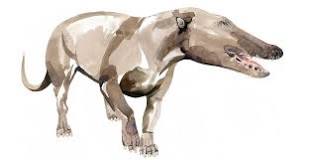
It might surprise you that the whale (largest fish in the ocean) once lived and walked on 4 legs.

It might surprise you that the whale (largest fish in the ocean) once lived and walked on 4 legs.

In fact, its land-dwelling ancestors, Pakicetus (the name is a giveaway) were found in the Indian sub-continent around 50 Mn years ago.

These ancestors could survive underwater and eventually because of series of evolutionary actions evolved into what we see today as the largest sea animal.

Illusions around reality

The ex-Reserve Bank of India Governor, Mr. Subbarao once said in a press-conference

That every policy action has unintended consequences along with the intended ones.

However, we often take the gains from an action without thinking about the other side of the coin.

Hindsight makes us all seem wise; however, it doesn’t help if we don’t learn from it.

The cycle of optimism/pessimism is known but not appreciated.

You are playing a cricket match and your strategy is to attack from the ball one and keep attacking irrespective of how it goes.

What would you do if you lose quick wickets or as a bowling side get hammered all over the place.

How would you adjust your game.

China’s “zero-covid” policy is an example.

You shut down the economy, what do you think will happen.

Businesses will suffer, supply chain will get disrupted and economy will shrink causing wide-spread distress which is not limited to you own country.

Nothing will ever prepare you

Preparing for a surprise can be adopted as a strategy, however you don’t know what’s a surprise so how you would ever prepare yourself.

For years investors blamed Fed for propping up asset prices beyond fair price and at the 1st sight of Fed tightening, they are all on the other side of table criticising Fed for negative impact on the asset prices.

You can’t keep worrying about surprises, they will come maybe once in a month or once in a year-you don’t know when.

However what you can do is to have a plan and stick to it.

The plan always reflects your risk-profile and your circumstances and anchors your investments to the same.

Account for the fact that there will be a periodic surprise and have a little cash set aside to take advantage instead of getting scared.

In the end-Stay the course and you will be fine